Case Studies

AeroBarrier in the Real World

From a 3,500-home carbon-neutral community in Arizona to Passive House certification on a 34-unit Manhattan apartment building — see what AeroBarrier makes possible.

Near Net Zero — Arizona

Mandalay Homes: 3,500 Carbon-Neutral Homes

1.4 → 0.6
ACH reduction per home
60 → 8
Solar panels needed for net-zero
$50K
Cost difference in solar per home
3,500
Carbon-neutral homes, Jasper community

The challenge: making net-zero affordable at scale

For five years, Mandalay Homes founder Dave Everson worked to offer carbon-neutral homes as a standard feature on every home they sold — not as a premium upgrade. The problem: the typical approach to net-zero is to load a roof with solar panels and ignore the budget. A typical code-built 2,000 sq ft home needs around 60 panels, costing roughly $60,000.

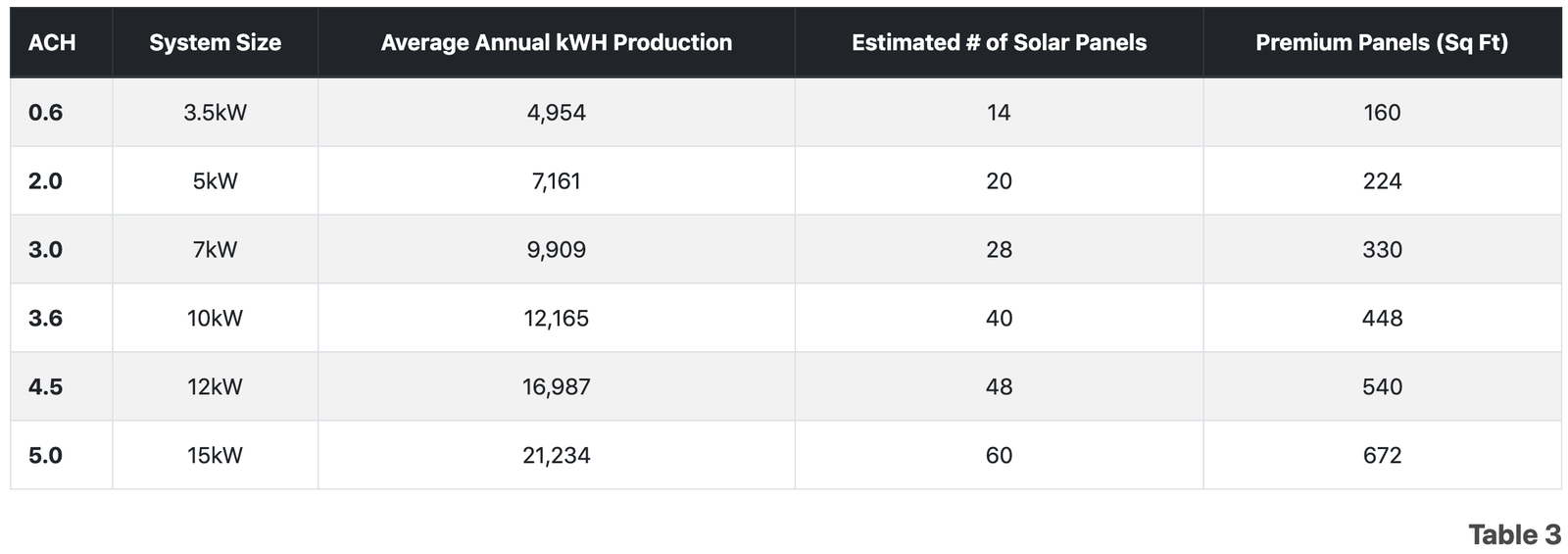
There is a direct correlation between lower air changes per hour (ACH) and fewer solar panels needed for net-zero. Everson had pushed a typical Mandalay home from a 74 HERS Index in 2012 to a 50 HERS Index by 2016 — but no matter how disciplined the team was on insulation and manual sealing, they could not get below 1.4 ACH. At that number, 30 solar panels per home were still required, adding about $30,000 to the price — too much to offer as a standard feature.

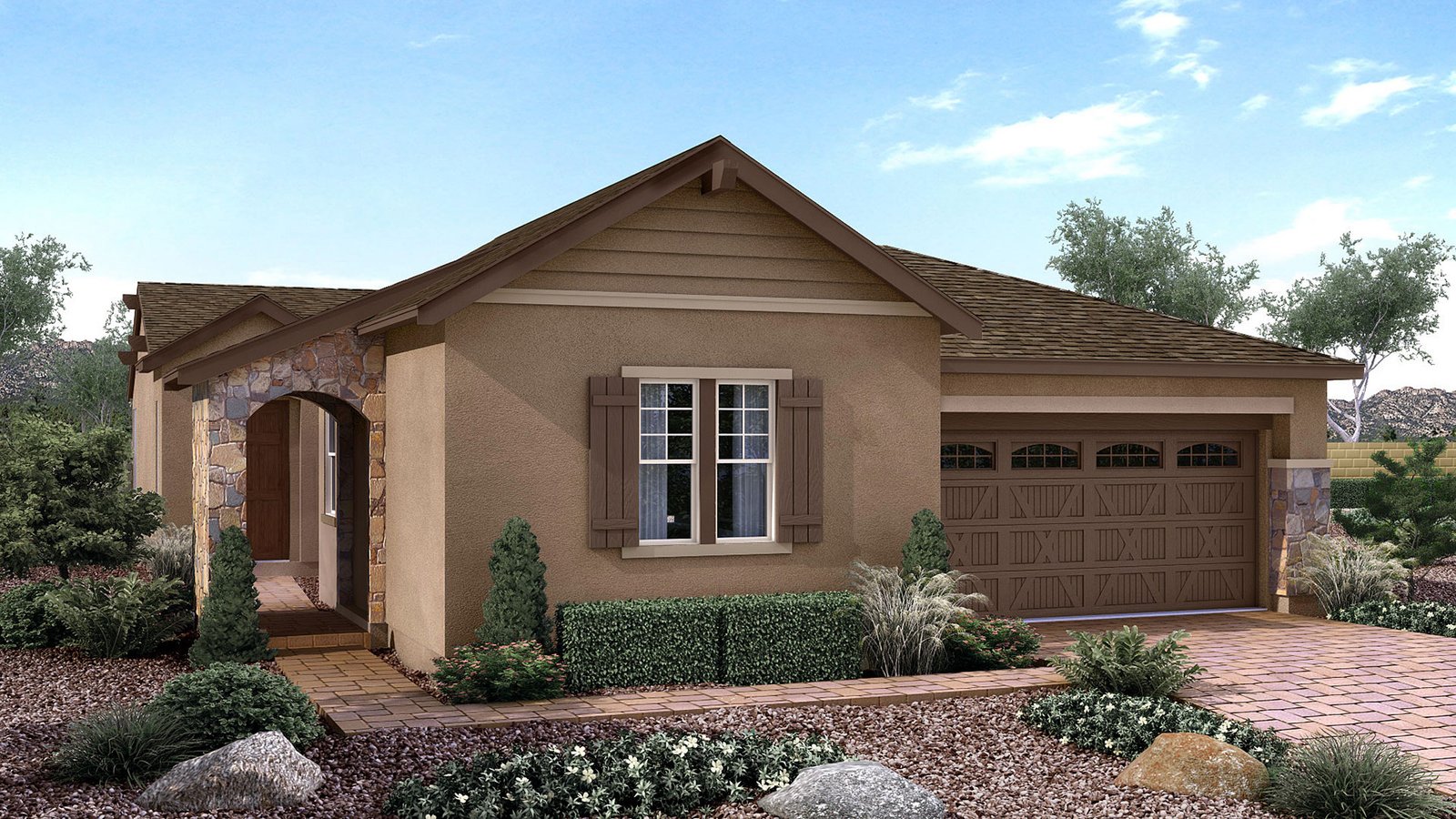
Mandalay Homes high-performance home exterior in Arizona
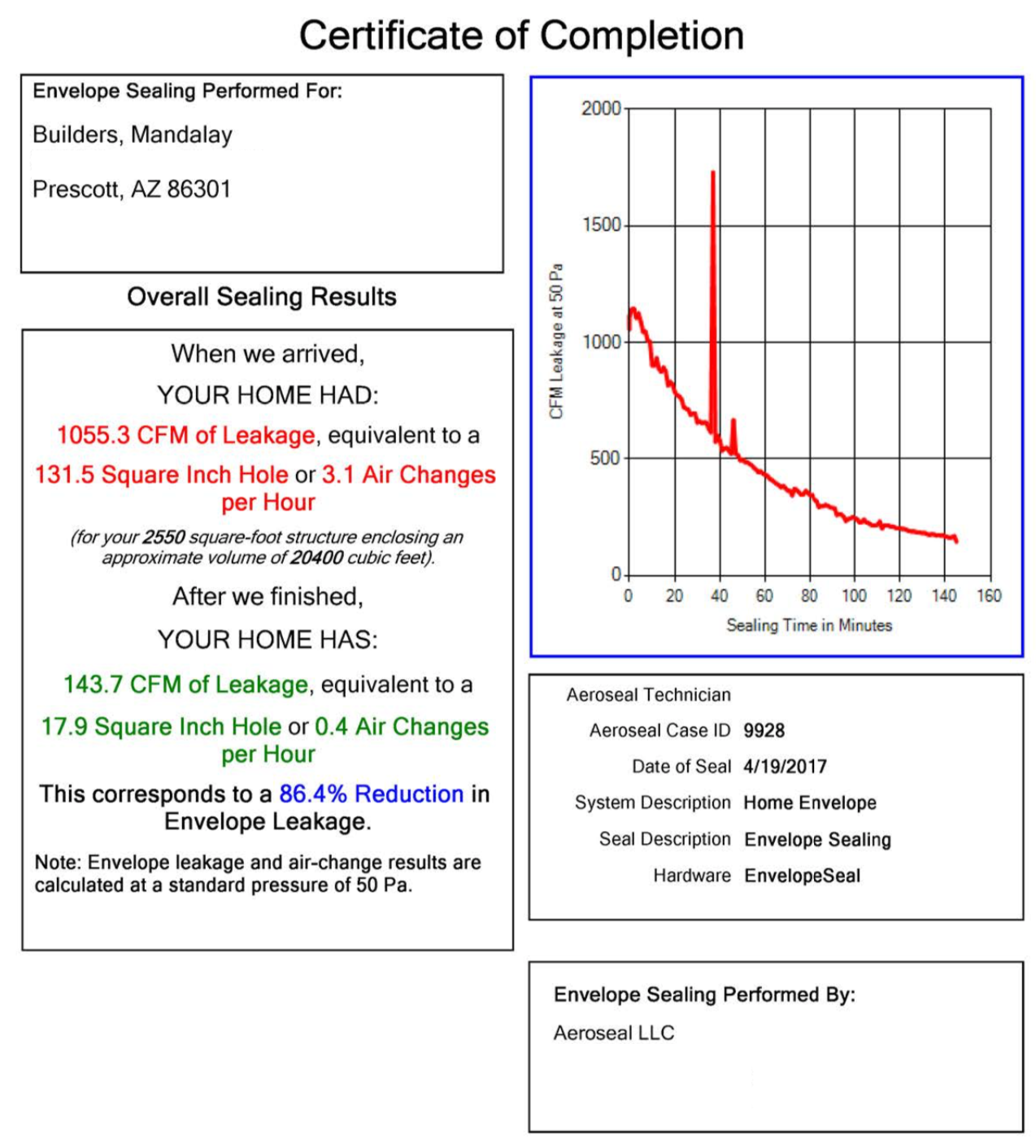
Mandalay Homes AeroBarrier case study results chart

The result: 1.4 to 0.6 ACH — and 8 solar panels

In 2017, Mandalay became one of the first beta-test partners for AeroBarrier. The result was immediate: AeroBarrier reduced the typical Mandalay home from 1.4 ACH to 0.6 ACH. That single step cracked the energy + homebuilding equation.

Combined with sonnenBatterie storage, the tighter envelope meant a typical 2,000 sq ft net-zero Mandalay home now requires only 8 solar panels instead of 60 — a $50,000 cost difference. Mandalay broke ground on 3,500 carbon-neutral homes in the Jasper master-planned community.

"At Mandalay, we believe the catalyst to the carbon-neutral community is AeroBarrier and it will be used on every home we build."

Dave Everson, Founder — Mandalay Homes
Path to Net Zero — Washington State

New Tradition Homes: Building the Best Home Possible

54
Typical New Tradition HERS Index (vs 72 state avg)
2.6 → 0.6
ACH on Nardozza home (90 minutes)
ENERGY STAR Partner of Year — Sustained Excellence
5,000+
Homes built since 1987
New Tradition Homes logo

A 30-year leader in energy-efficient homebuilding

For 30 years, New Tradition Homes has led the Washington home-building market, constructing over 5,000 single-family homes. Every New Tradition home is certified ENERGY STAR and Built Green Washington 3-star — the only high-volume builder in the state to achieve both, consistently. They received ENERGY STAR's highest honor, Partner of the Year Sustained Excellence, in 2016, 2017, and 2018.

Their typical home scores a 54 HERS Index — significantly better than the Washington state code average of 72 and well above the ENERGY STAR threshold of 65. But their sights were set higher: zero energy ready homes at market-competitive prices.

AeroBarrier — the missing piece

Energy rater Ron Nardozza, who has been New Tradition's third-party verifier for over a decade, was one of the first to bring AeroBarrier to their attention. At the International Builders Show, AeroBarrier won best product innovation. New Tradition took notice.

The first test was on Nardozza's own home — a 3,600 sq ft personal build. The result: within 90 minutes, ACH went from 2.6 to 0.6. The reduced energy demand meant the home would require very little solar to achieve zero energy.

"Within 90 minutes, the ACH went from 2.6 to 0.6. It was quite remarkable. The application was easy to set up, and the results were immediate."

Ron Nardozza, President — Four Walls
Air tightness data table from New Tradition Homes AeroBarrier beta test
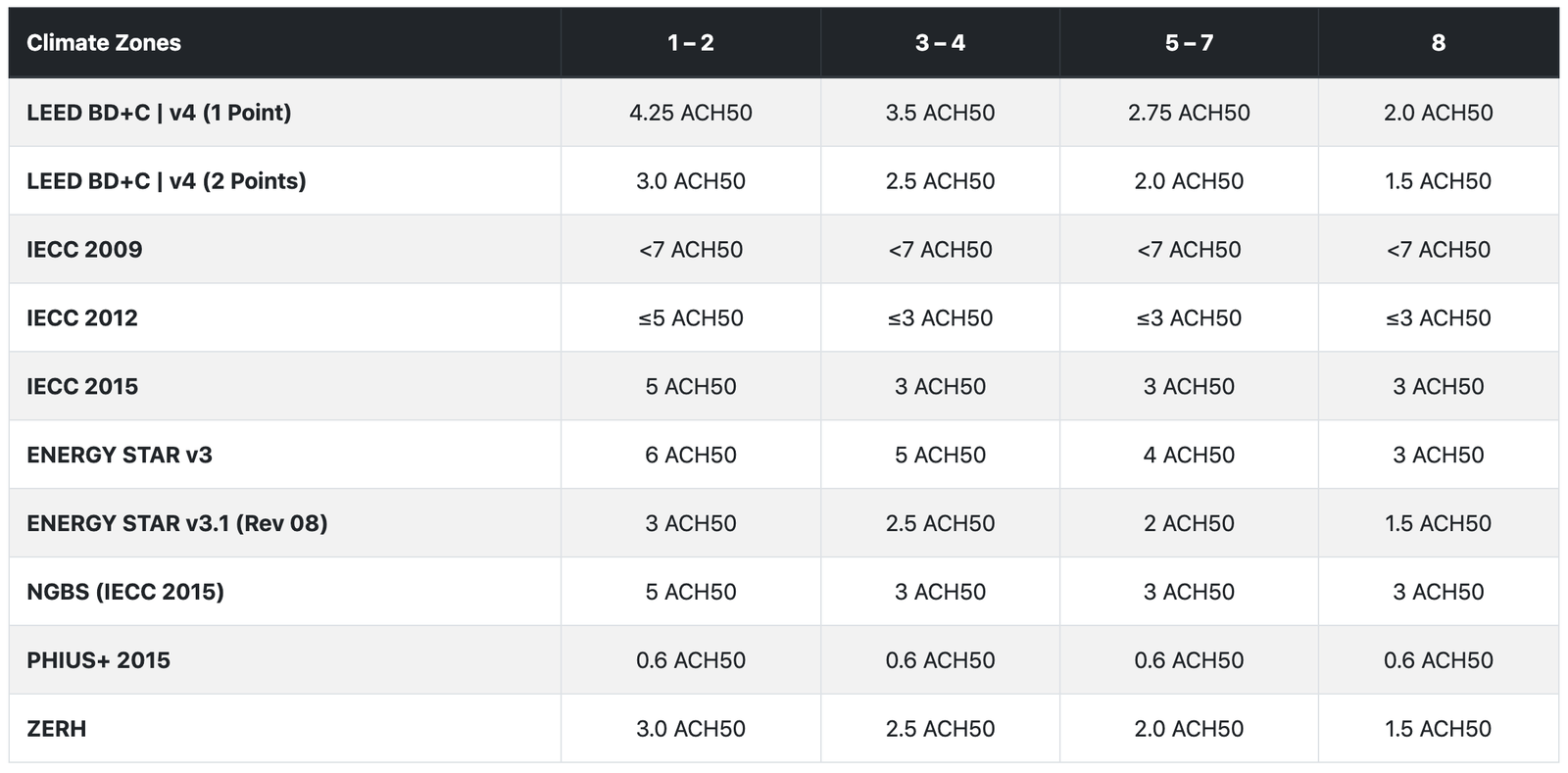
Solar panel reduction table showing relationship between ACH and panels needed

The path to zero energy at scale

As ACH decreases, so does the number of solar panels required for a zero energy home. With AeroBarrier reducing typical homes to sub-1.0 ACH, zero energy becomes financially feasible — and potentially a standard feature, not a premium option. New Tradition has already built 80 homes in the solar-ready Badger Mountain South community, with more underway.

"Once we reduce energy demand low enough, less solar is required and a zero energy home becomes financially feasible — giving us the ability to scale. If you can remain market competitive and offer a zero energy home, why wouldn't you do it?"

Steve Tapio, Building Science Team Leader — New Tradition Homes
Multifamily Passive House — Manhattan, NY

153rd St. Apartments: 34 Units to Passive House in 8 Days

34
Apartment units sealed
47%
Additional leakage reduction after manual caulking
0.6 ACH50
Final result — Passive House level
8 days
Total time to seal the entire building

The challenge: Passive House compartmentalization in a 6-story building

For New York architect Chris Benedict, compartmentalization — effectively sealing the envelope between apartment units — is the holy grail of multifamily design. It's critical for energy efficiency, indoor air quality, and limiting the migration of bugs, smoke, and noise between units.

Her newly constructed 6-story Upper West Side apartment building had been manually caulked by contractors, bringing it close to Passive House-level compartmentalization — but not quite there. With plumbing, electrical, and sheetrock already installed, further manual sealing was deemed impractical. The project needed a solution that could work on a completed building.

The result: every unit to Passive House levels

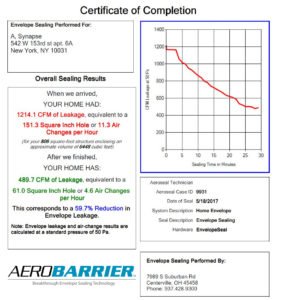
After AeroBarrier proved successful sealing a test unit, Benedict gave contractors the go-ahead for the full building. The AeroBarrier team sealed all 34 units to Passive House levels of 0.6 ACH50 in just 8 days. Post-manual-sealing, AeroBarrier added an additional 47% leakage reduction — achieving overall compartmentalization well within calculated Passive House parameters. Blower door tests confirmed the results.

AeroBarrier Certificate of Completion — 153rd St. Apartments, Manhattan: 1,214 CFM before, 490 CFM after, 59.7% reduction

Certificate of Completion

Download full case study (PDF)

"I don't know of any other way to get the level of tightness we were looking for. No amount of caulking could get this type of result. Most importantly, with AeroBarrier, you know you're going to get the results you want in the end. It's cost-effective and highly efficient at reducing energy costs and improving livability for our tenants. There's nothing that can compete with that."

Chris Benedict, R.A.
Architect

"It was blowing people's minds — mostly because monitoring compartmentalization in a multi-family building under construction is typically a very difficult, time-consuming task. The level of coordination and commitment you need to get from all contractors on the job is as critical as it is nearly impossible to achieve. With AeroBarrier, it's simply not a problem."

Justin Palmer
CEO, Synapse Development

Download the full case study (PDF)

Ready to add your project to the list?

We service every county in Arizona. Contact us to discuss your project and get a quote.

Get a Quote